- Content version
- 1.0
- Last scientific review
- مايو 2026
What is a nasal fracture?
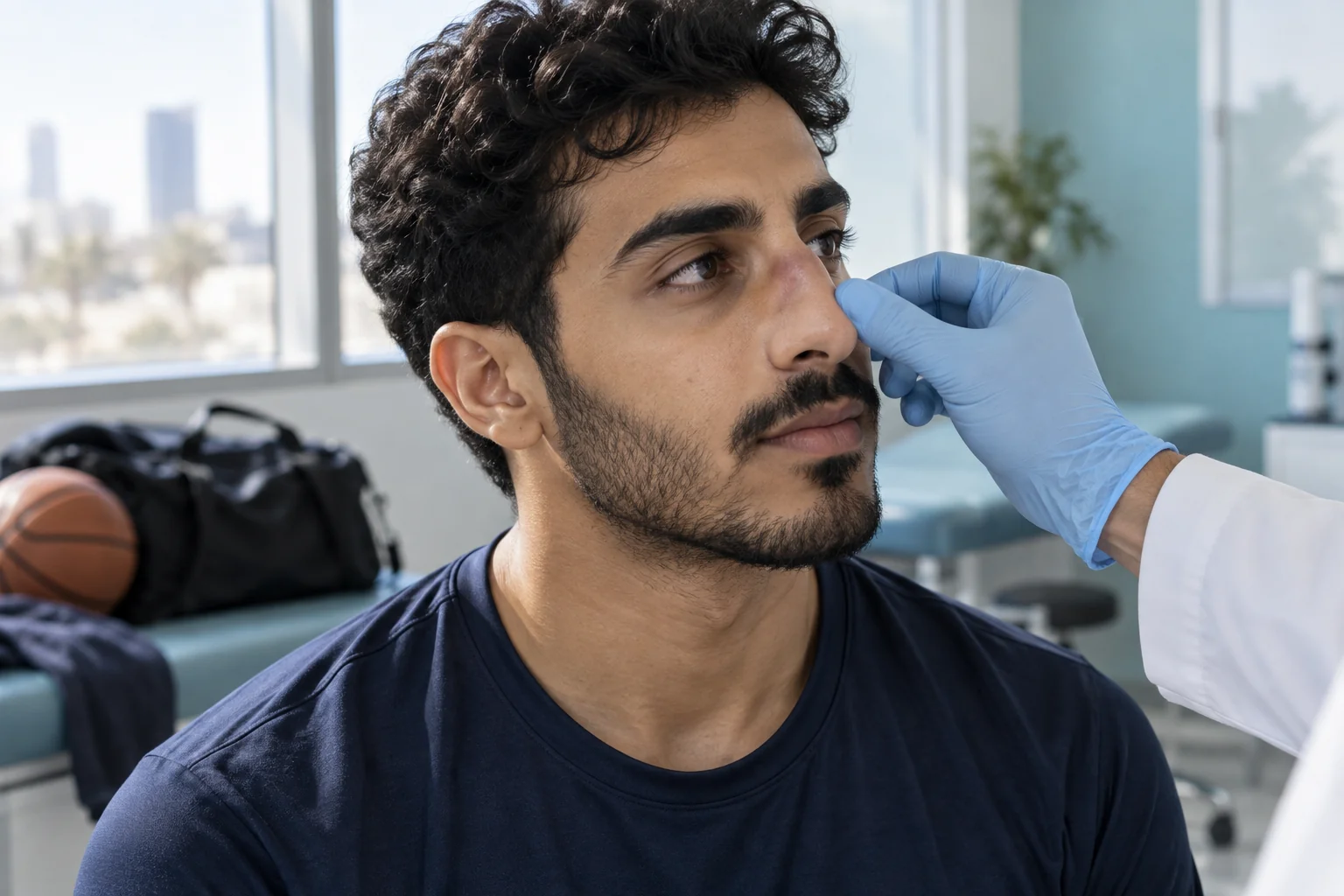
The nose is the most commonly fractured facial bone, due to its prominent position on the face. Fractures often result from falls, sports, accidents, or blows.
Most nasal fractures are simple, but some injuries need urgent evaluation.
What are the symptoms?
- Pain and swelling of the nose
- Nosebleed
- Bruising around the nose or under the eyes
- A crooked or changed nasal shape
- Difficulty breathing through the nose
- A crackling sound when touching the nose
Swelling can hide the true shape of the nose. For this reason, doctors often assess the nose's shape several days after the injury, once swelling has subsided.
First aid
- Apply a cold compress wrapped in cloth to the nose for 10–20 minutes, repeated several times a day for the first two days.
- Keep your head elevated, even during sleep.
- If the nose bleeds, sit, lean forward, and gently pinch the soft lower part.
- Do not try to reposition the nose yourself.
How is it diagnosed?
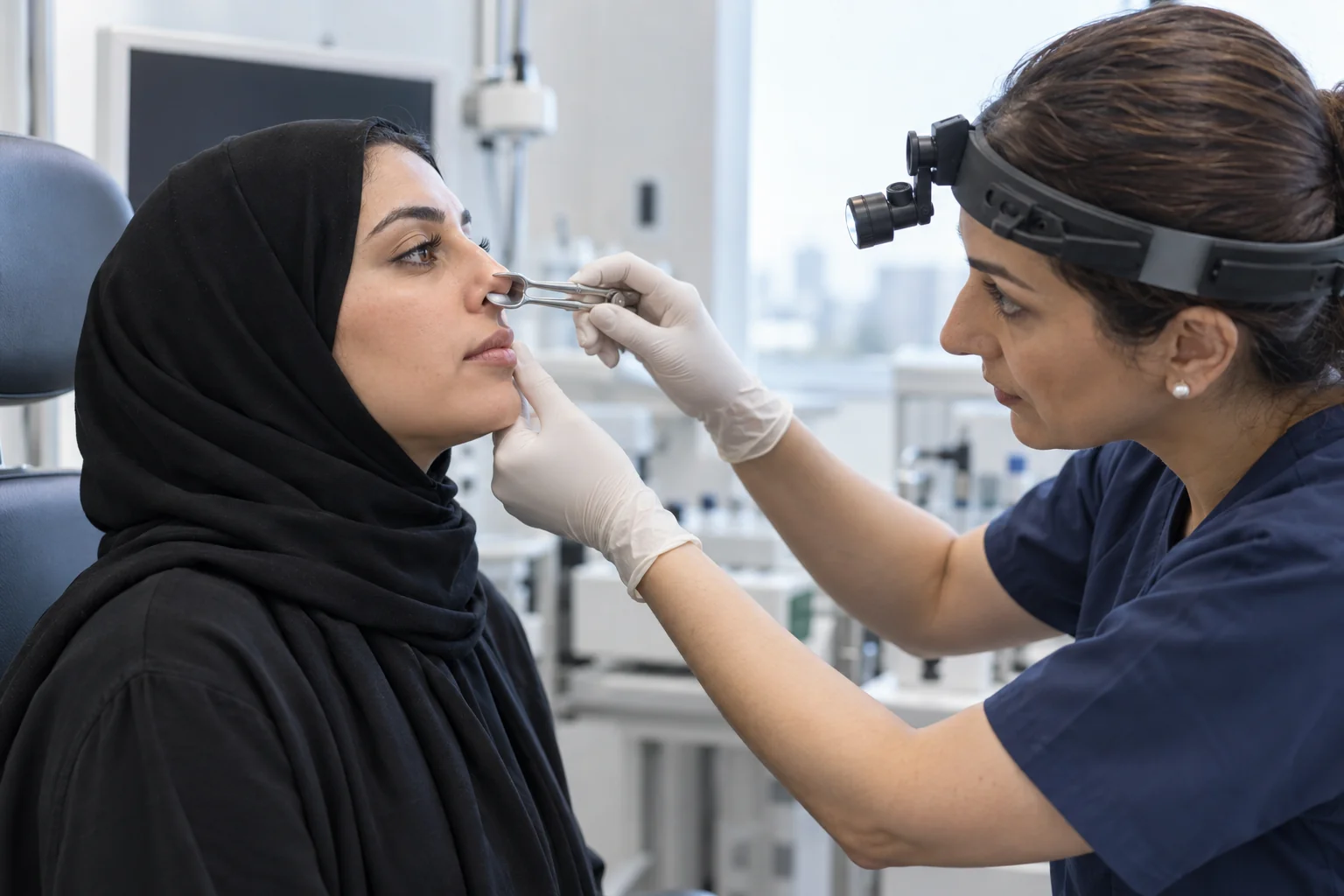
Diagnosis relies mainly on examination: the doctor looks at the external shape of the nose and examines the inside to rule out a blood collection.
Most simple nasal fractures don't need imaging. A CT scan may be ordered if other facial fractures are suspected.
Septal hematoma
A blood collection inside the nose can occur after injury, especially in children. It causes severe obstruction and pain and needs urgent drainage by a doctor. If untreated, it can cause infection and damage to the nasal cartilage, permanently changing the nose's shape.
What are the treatment options?
Fracture without shape change
Pain management and cold compresses are usually enough, and the fracture heals on its own.
Fracture with a crooked nose
The doctor may reposition the nasal bones without an incision, under local or general anesthesia. The best time for this is usually within the first one to two weeks after injury, and earlier in children.
If treatment is delayed
Once the bones heal in an incorrect position, the patient may later need septoplasty or rhinoplasty to correct shape and breathing; the doctor determines the appropriate timing.
Don't delay seeking care if you notice a change in the shape of your nose, since the opportunity for simple correction is greatest in the first days after injury.
What should I do during recovery?
- Use pain relievers as directed by your doctor or pharmacist.
- Avoid blowing your nose forcefully in the first days.
- Avoid wearing heavy glasses on the nose if possible.
- Avoid contact and combat sports for about 6 weeks, or as directed by your doctor.
How do I protect my nose?
- Wear a helmet and face protection in sports that require it.
- Always wear your seatbelt in the car.
- Keep children safe in play areas.
When should I see a doctor?
- If the shape of the nose changes or becomes crooked after swelling subsides.
- If difficulty breathing through the nose persists.
- If bleeding recurs after the injury.
- If a child's nose is injured — early evaluation is preferred.
Go to the emergency room immediately if:
- Bleeding doesn't stop after 20 minutes of pressure
- Swelling inside the nose completely blocks it with severe pain
- Clear, watery fluid runs from the nose
- Loss of consciousness, severe headache, or repeated vomiting occurs
- Vision changes or double vision appears
- Difficulty opening the mouth or a change in how the teeth bite together
- There are deep facial wounds
Remember
- Cold compresses and head elevation reduce swelling.
- A change in nasal shape is assessed after swelling subsides, within days of injury.
- Severe obstruction with pain inside the nose may indicate a blood collection needing urgent treatment.
- Clear watery fluid from the nose after an injury is a medical emergency.
This information is for health awareness and education, and does not replace a doctor's consultation or direct medical assessment.
Prepared by: Saudi Society of Otolaryngology–Head & Neck Surgery · Version 1.0 · Last reviewed: May 2026 · saudiorl.com