
- Content version
- 1.0
- Last scientific review
- مايو 2026
What is otitis media?
The middle ear is a small cavity behind the eardrum, connected to the back of the nose through a passage called the Eustachian tube. When this tube becomes blocked with a cold, fluid collects behind the eardrum and may become infected.
It is one of the most common reasons for doctor visits among young children.
What are the symptoms?
- Ear pain, often starting after a cold
- Fever
- Temporary reduced hearing
- Discharge from the ear if a small eardrum perforation occurs
In infants and young children:
- Crying and irritability, especially when lying down
- Pulling or rubbing the ear
- Difficulty sleeping, or poor feeding
What are the risk factors?
- Frequent colds
- Exposure to cigarette smoke
- Bottle-feeding while lying down
- Daycare and group settings
- Enlarged adenoids
How is it diagnosed?
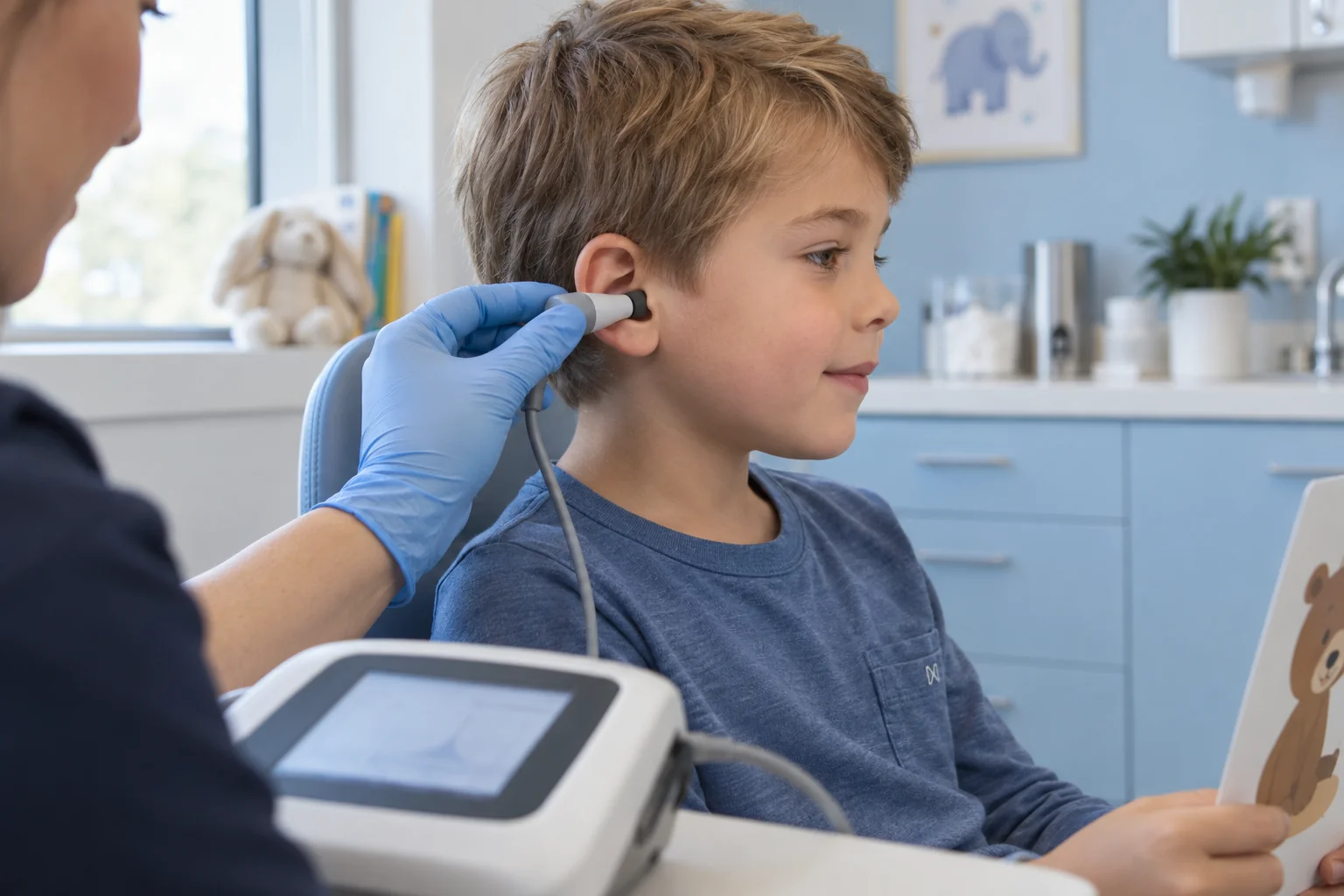
The doctor examines the eardrum with an otoscope, seeing redness and bulging caused by fluid. Most cases don't need further testing.
How is it treated?
Pain relief first
Age-appropriate pain relievers and fever reducers are the most important part of treatment, dosed according to the child's weight and the doctor's or pharmacist's guidance.
Watchful waiting
Many cases improve within two to three days without antibiotics. The doctor may choose to observe first in some older children with mild symptoms, reassessing if there's no improvement.
Antibiotics
Usually given to young infants, severe cases, when both ears are affected in young children, or when there's discharge. Complete the full course prescribed.
Be careful
- Don't put any oils or drops in the ear without consulting the doctor, especially with discharge present.
- Don't give a child leftover antibiotics from a previous illness.
- Don't give aspirin to children.
What happens after the infection?
Fluid may remain behind the eardrum for several weeks after the infection clears, with temporary reduced hearing. It resolves on its own in most cases.
If fluid persists more than 3 months or infections recur frequently, ventilation tubes may be recommended. See the booklet on middle ear fluid and ventilation tubes.
How can I reduce the risk of infection?
- Keep the child's vaccinations up to date, including pneumococcal and influenza vaccines.
- Breastfeed when possible.
- Avoid bottle-feeding a child while lying flat.
- Keep the child away from cigarette and shisha smoke.
- Wash hands thoroughly to reduce colds.
When should I see a doctor?
- If the child is under 6 months old and shows symptoms.
- If pain or fever lasts more than two to three days.
- If discharge comes from the ear.
- If infections recur.
- If reduced hearing persists after the infection clears.
- If an adult has persistent fluid in one ear.
Go to the emergency room immediately if you notice:
- Swelling or redness behind the ear, or the ear protruding forward
- Weakness or drooping of the facial muscles
- Severe headache or neck stiffness
- Severe drowsiness or confusion
- Severe dizziness with vomiting
Remember
- Pain relief is the first step in treatment.
- Not every case needs antibiotics.
- Fluid after infection is common and usually resolves on its own.
- Swelling behind the ear or facial weakness is a medical emergency.
This information is for health awareness and education, and does not replace a doctor's consultation or direct medical assessment.
Prepared by: Saudi Society of Otolaryngology–Head & Neck Surgery · Version 1.0 · Last reviewed: May 2026 · saudiorl.com