
- Content version
- 1.0
- Last scientific review
- مايو 2026
What is earwax?
Earwax is a natural substance produced by the ear canal to protect and moisturize it, and to trap dust and germs. The ear normally cleans itself, with wax gradually moving outward with jaw movement.
Having earwax is normal and does not mean poor hygiene.
When does wax become a problem?
In some people, wax builds up and blocks the ear, causing:
- A feeling of fullness or blockage in the ear
- Reduced hearing
- Tinnitus (ringing in the ear)
- Mild itching or discomfort
- Sometimes dizziness or coughing
Who is more at risk?
- People who regularly use cotton swabs
- Hearing aid and earphone users
- Older adults
- People with a narrow or hairy ear canal
Cotton swabs often push wax further inward and can scratch the canal or perforate the eardrum. Use them only to clean the outer ear.
How is it diagnosed?
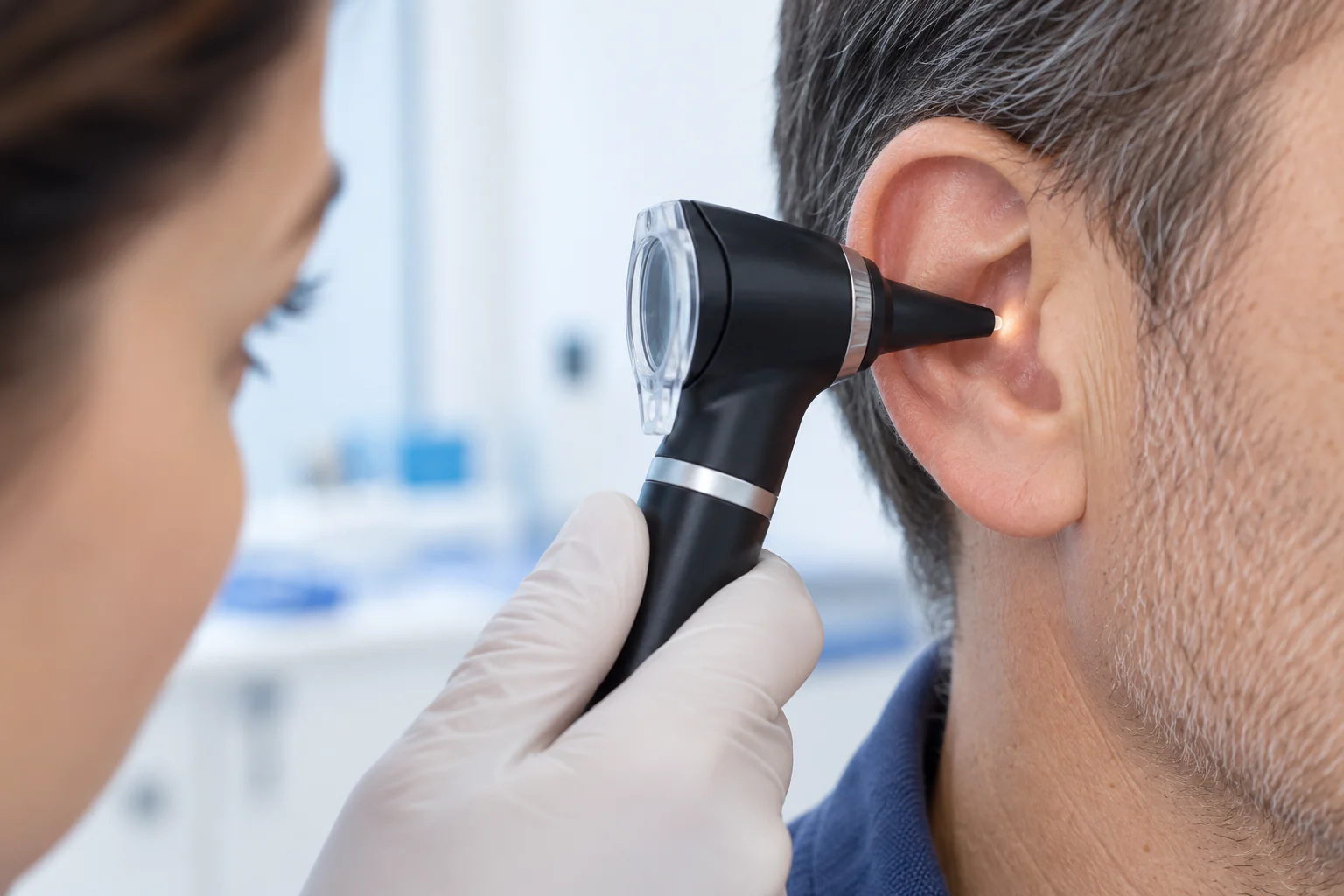
The doctor examines the ear with an otoscope, seeing the wax and confirming the canal and eardrum are healthy. A hearing test may be requested if reduced hearing persists after wax removal.
How is built-up wax treated?
Wax-softening drops
Help soften the wax so it can come out, and may be used for a few days before removal by a doctor. Don't use them if you have a perforated eardrum or ventilation tubes.
Ear irrigation
Performed gently with warm water by a doctor or specialist; not suitable for some patients, such as those with a perforated eardrum.
Manual removal
The doctor removes wax with special instruments or suction under direct vision — the most suitable method for many cases.
Avoid these methods
- Ear candling: ineffective, and can cause burns and blockage from melted wax.
- Inserting cotton swabs, hairpins, or keys into the ear.
- Strong home irrigation devices.
- Applying oils or unknown substances if there is pain or discharge.
How do I take care of my ears?
- Clean the outer ear with a cloth after bathing.
- Leave the wax inside the canal — it comes out on its own.
- Don't clean your ears repeatedly without need.
If you use a hearing aid
- Clean the device daily following the manufacturer's instructions.
- Have your ears checked periodically, since the device prevents natural wax from coming out.
In children: don't insert anything into a child's ear. If they're pulling at or complaining about their ear, see a doctor.
When should I see a doctor?
- If you feel blockage or reduced hearing that doesn't improve.
- If you have pain, discharge, or bleeding from the ear.
- If you have a perforated eardrum, ventilation tubes, or a previous ear surgery.
- If you have diabetes or a weakened immune system.
- If you use a hearing aid and notice whistling or reduced performance.
See a doctor urgently if:
- You suddenly lose hearing, especially in one ear
- Symptoms are accompanied by severe dizziness or facial muscle weakness
Remember
- Wax is a natural substance that protects the ear.
- The ear cleans itself in most cases.
- Cotton swabs are for the outer ear only.
- Ear candles are unsafe and not recommended.
- Sudden hearing loss needs urgent evaluation.
This information is for health awareness and education, and does not replace a doctor's consultation or direct medical assessment.
Prepared by: Saudi Society of Otolaryngology–Head & Neck Surgery · Version 1.0 · Last reviewed: May 2026 · saudiorl.com