- Content version
- 1.0
- Last scientific review
- مايو 2026
What is endoscopic sinus surgery?
Surgery performed from inside the nose without external incisions, to widen the sinus openings and remove polyps or chronic inflammation, and to allow rinses and medications to reach the sinuses more effectively.
Surgery is part of the treatment — continuing treatment afterward is essential for its success.
Normal findings after surgery
- Nasal congestion for one to two weeks
- Blood-tinged discharge in the first days, then brown or dark discharge for weeks
- Crusting inside the nose
- Mild pressure or pain in the face or head
- Fatigue in the first week
- Temporary reduced sense of smell, which may gradually improve as healing progresses
Improvement is gradual: the nose and sinuses heal over several weeks, and many patients feel fully improved after one to three months.
Saline rinses: the most important step
- Begin rinsing at the time set by your surgeon, usually one to two days after surgery.
- Use a large volume of saline with a squeeze bottle or neti pot, several times a day, or as instructed.
- Use sterile or boiled-then-cooled water, and clean the bottle thoroughly after each use.
- Your surgeon may add medication to the rinse; follow their instructions for its use.
Rinsing helps remove crusts and clotted blood, reduces adhesions, and speeds healing.
Nasal care
- Don't blow your nose forcefully for about a week.
- Open your mouth when sneezing.
- Don't insert anything into the nose.
Medications
- Follow the medications prescribed by your surgeon, such as a nasal steroid spray or others.
- Don't use aspirin or anti-inflammatory pain relievers without your surgeon's approval.
- If you have nasal polyps or asthma: treatment after surgery is long-term and reduces the chance of polyps returning. Don't stop it without consulting your doctor.
Activity and sleep
- Elevate your head during sleep in the first week.
- Avoid bending, lifting heavy objects, and strenuous exercise for two weeks.
- Avoid swimming until your surgeon allows it.
- Consult your surgeon before flying in the first two weeks.
- Return to office work usually after about a week.
Follow-up visits
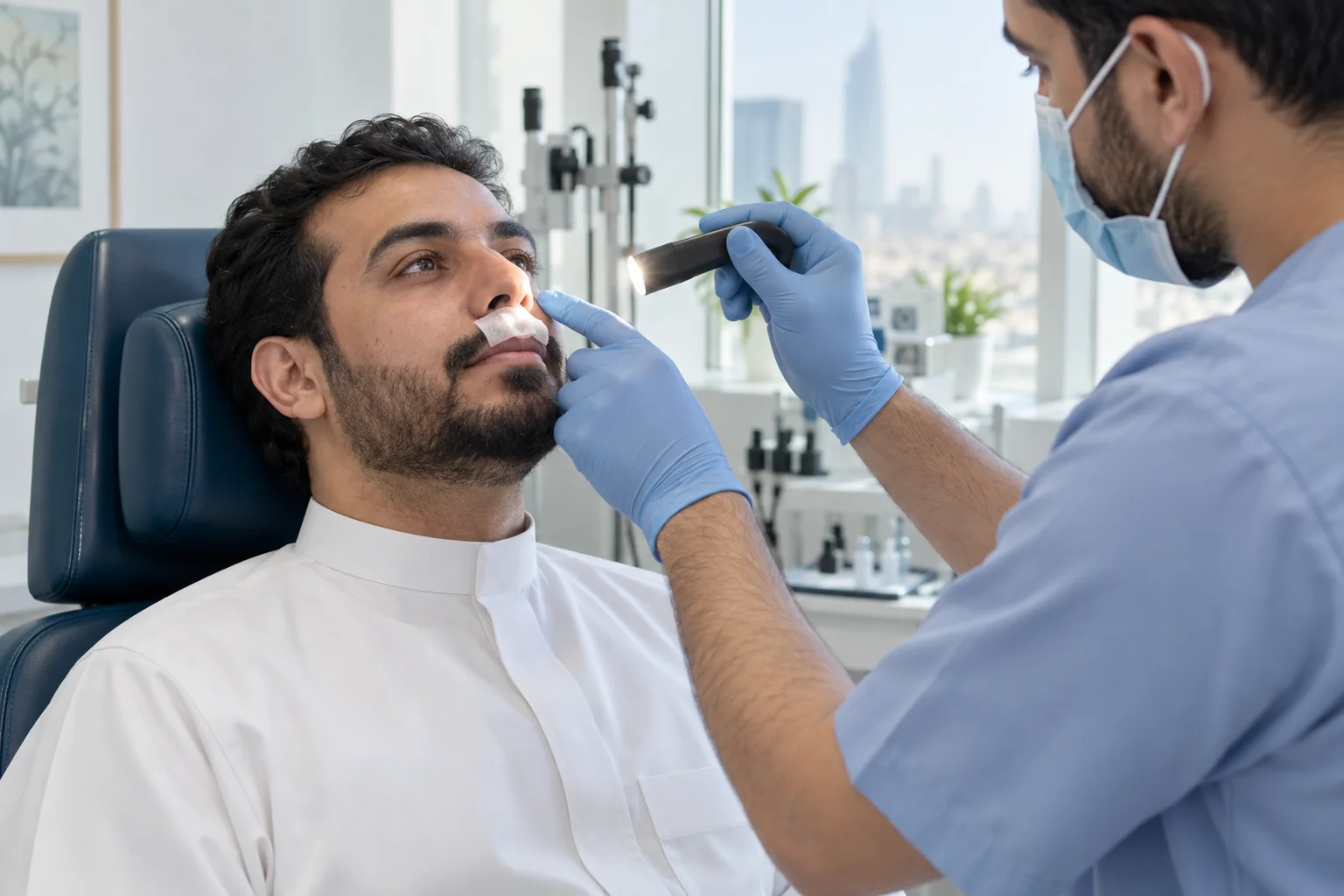
Follow-up appointments are an important part of the surgery's success. The doctor cleans the nose and sinuses with an endoscope, removes crusts, and prevents adhesions. You may feel mild discomfort during cleaning.
Avoid
- Smoking and shisha, as they delay healing and increase the chance of the disease returning
- Dusty, smoky, or incense-filled places in the first weeks
Go to the emergency room immediately if:
- Heavy bleeding doesn't stop after 15–20 minutes
- Swelling or bruising appears around the eye, or pain when moving it
- Vision changes or double vision appears
- Clear, watery fluid continuously runs from the nose, especially when bending forward
- Severe headache appears with neck stiffness or high fever
- Confusion or unusual drowsiness occurs
Contact your doctor if:
- Fever rises above 38.5°C
- Pain increases after it had been improving
- Foul-smelling or yellow-green discharge appears with pain
Remember
- Regular saline rinses are the most important factor in recovery.
- Dark discharge and crusting are normal for weeks.
- Keep your cleaning and follow-up appointments.
- Eye swelling, vision changes, or clear watery fluid are medical emergencies.
This information is for health awareness and education, and does not replace a doctor's consultation or direct medical assessment.
Prepared by: Saudi Society of Otolaryngology–Head & Neck Surgery · Version 1.0 · Last reviewed: May 2026 · saudiorl.com