
- Content version
- 1.0
- Last scientific review
- مايو 2026
What are ear surgeries?
Ear surgeries include eardrum repair, mastoid (behind-the-ear) surgery, and surgery on the small hearing bones. Instructions vary slightly depending on the type of surgery.
Always follow the specific instructions given to you by your surgeon, as they take priority over this booklet.
Normal findings after surgery
- Mild to moderate pain that improves within days
- Temporary reduced hearing due to packing inside the ear
- Clicking, popping sounds, or a sensation of fluid in the ear
- A small amount of blood-tinged discharge
- Numbness around the ear or in the ear's outer part for weeks to months
- Mild dizziness in the first days
- A change in taste on the side of the tongue near the surgery, which usually improves over time
Packing inside the ear: some dissolves on its own, and the doctor removes the rest at your follow-up appointment. Don't try to remove it yourself.
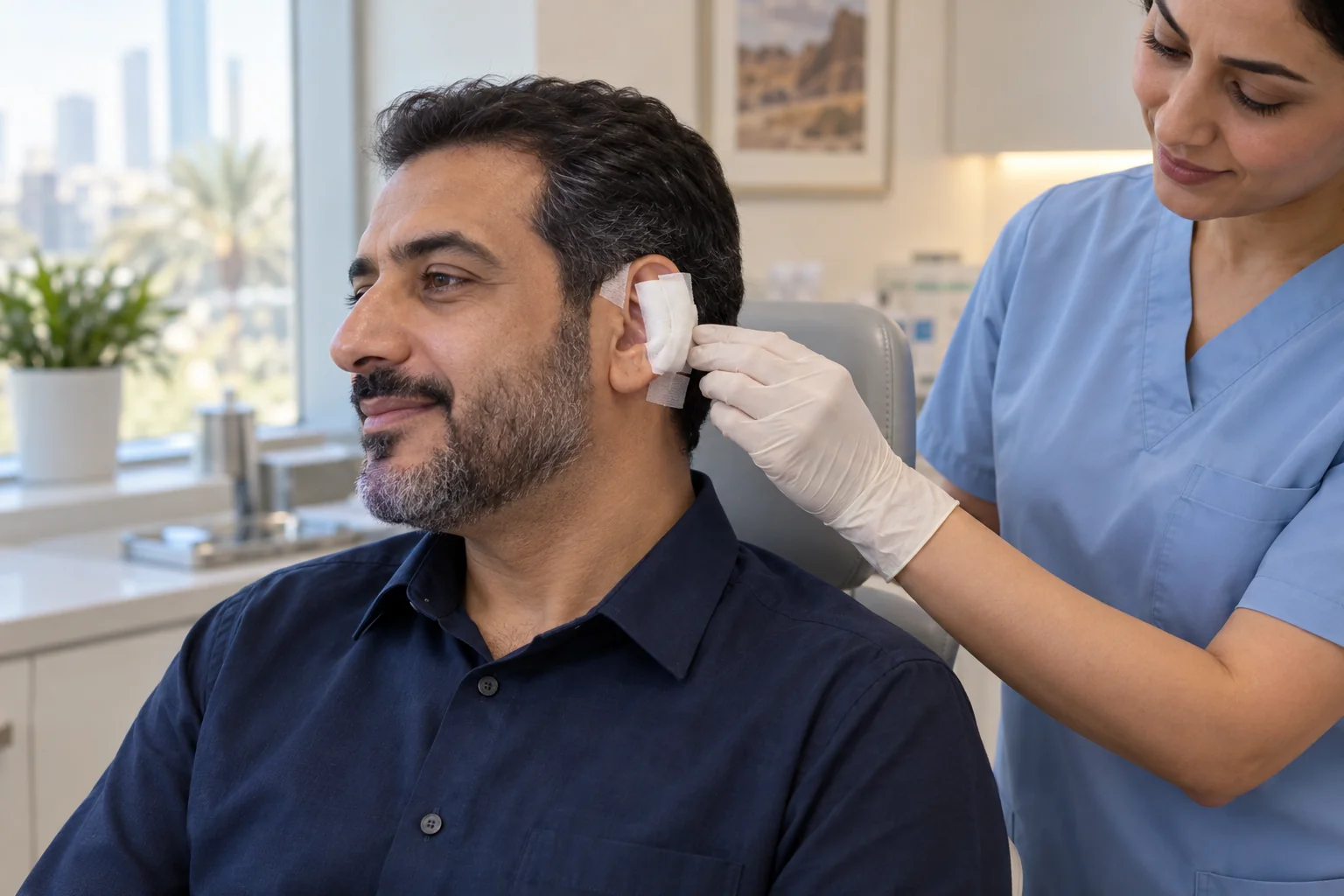
Wound and dressing care
- A head bandage may be applied and is usually removed after a day or as directed by your surgeon.
- Keep the wound clean and dry.
- Change the cotton ball in the ear opening when it becomes wet with discharge.
- Use ointment on the wound if prescribed by your surgeon.
- Don't sleep on the operated ear in the first days.
Keep the ear dry
- No water should enter the ear until your surgeon allows it, usually several weeks.
- When bathing, place a cotton ball coated with petroleum jelly in the ear opening.
- Wash your hair carefully, or with help, tilting your head away from the ear.
- Don't swim until your surgeon allows it.
Protect the ear from pressure
- Don't blow your nose forcefully — wipe it gently only.
- Open your mouth when sneezing.
- Avoid lifting heavy objects, bending, and straining for two to three weeks.
- Treat constipation to avoid straining.
Air travel and diving
- Consult your surgeon before flying, as some patients need to wait several weeks.
- Don't dive until your surgeon gives permission.
Medications
- Use pain relievers, antibiotics, and ear drops only as prescribed by your surgeon.
- Don't put any other drops in the ear without consulting your surgeon.
Returning to work and school
Most patients return to office work or school after one to two weeks. Strenuous work and sports may require more time, as directed by your surgeon.
When will hearing improve?
Hearing will be reduced at first due to packing and swelling. It's usually assessed with a hearing test several weeks to months after surgery, once healing is complete.
Go to the emergency room immediately if:
- New weakness or drooping of the facial muscles appears
- Severe dizziness occurs with continuous vomiting
- You suddenly lose hearing completely in the operated ear
- Severe headache appears with neck stiffness or high fever
- A large amount of clear, watery fluid runs from the ear or nose
Contact your doctor if:
- Pain increases after it had been improving
- Fever rises above 38.5°C
- Foul-smelling discharge or pus appears
- The wound becomes red, swollen, or discharges pus
- The wound or ear gets wet with water
Remember
- Keep the ear dry until your surgeon allows otherwise.
- Don't blow your nose forcefully, and open your mouth when sneezing.
- Temporary reduced hearing after surgery is normal.
- New facial weakness or severe dizziness is a medical emergency.
This information is for health awareness and education, and does not replace a doctor's consultation or direct medical assessment.
Prepared by: Saudi Society of Otolaryngology–Head & Neck Surgery · Version 1.0 · Last reviewed: May 2026 · saudiorl.com